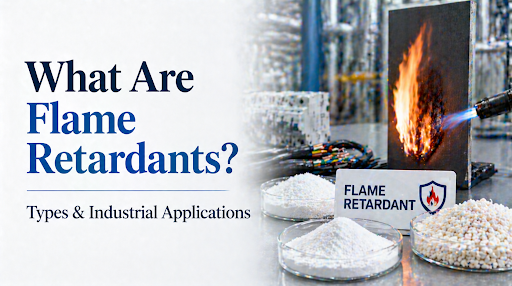
In the current industrial environment, fire safety is not only a legal requirement but also a key factor in the design of products and materials. Among the most important factors that influence the fire resistance of materials are flame retardants. Flame retardants are specifically designed to slow down or stop the spread of fire, thus giving sufficient time for evacuation and minimizing damage to property.
At our end, we recognize the importance of safety in performance. Flame retardants have found wide use in different industries such as construction, textiles, electronics, and automobile manufacturing. Thus, flame retardants have become essential in the current industrial environment.
Flame retardants are those materials that interfere with the process of burning. The process of burning is a natural process that involves three components: heat, fuel, and oxygen. Flame retardants interfere with any of these components to control the intensity of the fire.
Flame retardants have different modes of action, which include:
The modes of action of flame retardants differ depending on the retardants and materials used.
These flame retardants can be grouped into different types depending on their composition and the way they function. Understanding the different types is important for different industries to identify the best flame retardants to be used.
These flame retardants are believed to be the best and most used. Their composition includes the composition of chlorine and bromine. They function by interfering with the chemical reactions in the flame.
Key characteristics:
These retardants work by promoting the formation of char, which acts as a barrier on the surface of the material being protected from fire.
Applications include:
Phosphorus-based retardants are found to be environmentally friendly compared to other retardants, such as halogenated retardants.
This type of flame retardant, in combination with phosphorus-based flame retardants, can assist in the production of inert gases to dilute flammable gases.
Advantages:
This category of flame retardants includes aluminum hydroxide and magnesium hydroxide. The primary mode of action of these retardants is to release water when they get hot, which then acts to cool them.
Common uses:
This type of flame retardant is most popular because of its non-toxic and smoke-suppressing qualities.
The flame-retardant market is in constant demand, and industries across sectors require them. This is because flame retardants play an important role in ensuring safety, compliance, and longevity. At the core of product development and material engineering, flame retardants play an important role in getting the job done.
Fire-resistant materials play an important role in building construction. This ensures that damage to structures and the safety of human life are not compromised.
Flame retardants play an important role in ensuring that these materials comply with building regulations.
In the field of electrical and electronics, flame retardants can be used to ensure the safety of various polymer-based components. These components can catch fire easily. Flame retardants can be used to ensure safety in the following components:
These flame retardants can reduce the chances of short-circuit fires and overheating.
In the automotive sector, the usage of lightweight materials is on the rise. As such, the safety aspect with regard to fire is the biggest concern. Flame retardants can be used to ensure safety in the following components:
These flame retardants can ensure the safety of the vehicles, which is the main requirement in the automotive sector. Strict safety regulations are followed in the automotive sector.
From home furnishings to industrial fabrics, flame-resistant textiles are widely used.
These materials are treated to reduce fire risks in both residential and commercial environments.
The selection of a suitable flame retardant solution is based on a number of parameters. Before a solution is chosen, some factors need to be considered, as learned from our experience.
The factors include:
The selection of a solution is, therefore, an informed one to ensure the longevity of the product.
The flame-retardant industry is shifting towards sustainable and high-performance technologies. The focus is on the development of technologies that are environmentally friendly.
Some of the important trends in the flame retardant market include:
These developments are creating the future for flame-retardant technologies.
The implementation of flame retardants in industrial processes is not merely a simple choice of a product, but a complex process involving techniques, tests, and evaluations.
Our perspective on implementing these technologies is:
This process helps in achieving safety measures with long-term sustainability.
As industries grow and develop, the importance of fire safety increases all the more. Flame-retardant solutions are no longer limited to dangerous environments; they are a necessity in every industry.
The future of these technologies is a combination of safety and innovation, where businesses are looking for advanced technologies like fire-resistant chemicals, intumescent coatings, flame-retardant additives, industrial fire safety solutions, heat-resistant materials, and polymer flame retardants, which meet global safety standards.
By staying aligned with these developments and using the right technologies, industries can ensure the development of safer, more reliable, and future-ready materials without compromising on quality or efficiency.
Expert content creator passionate about sharing insights and knowledge through engaging storytelling.
View all posts