

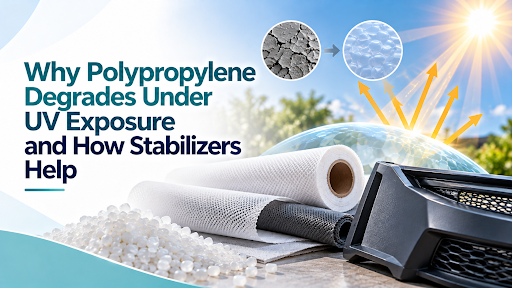
Why Polypropylene Degrades Under UV Exposure and How Stabilizers Help
Learn why polypropylene degrades under UV exposure, how UV stabilizers help reduce damage, and what factors matter when selecting stabilizers for outdoor plastic products.
Home›Blog

Learn why polypropylene degrades under UV exposure, how UV stabilizers help reduce damage, and what factors matter when selecting stabilizers for outdoor plastic products.
Read More
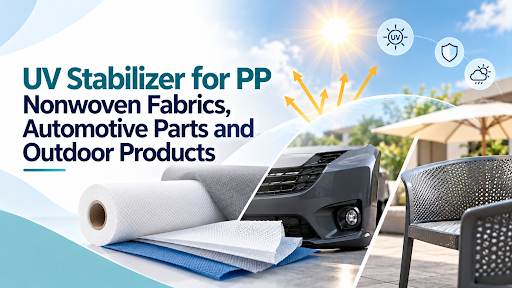
Learn how UV stabilizers help protect polypropylene products from sunlight exposure and what to consider when selecting stabilizer masterbatches for different applications.
Read More
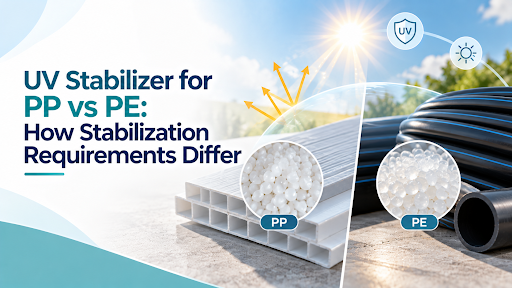
Understand how UV stabilization requirements differ for PP and PE plastics, including sunlight exposure, stabilizer selection, product life, and formulation factors.
Read More
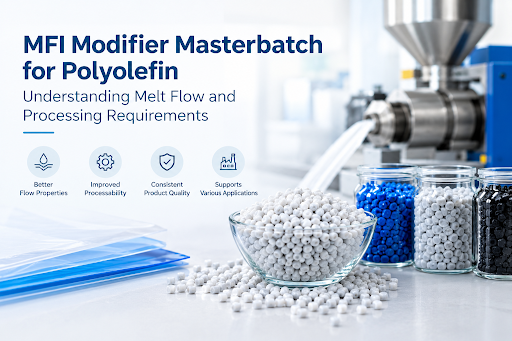
Learn how MFI modifier masterbatch for polyolefin supports melt flow adjustment, processing considerations, and formulation development for plastic manufacturing.
Read More
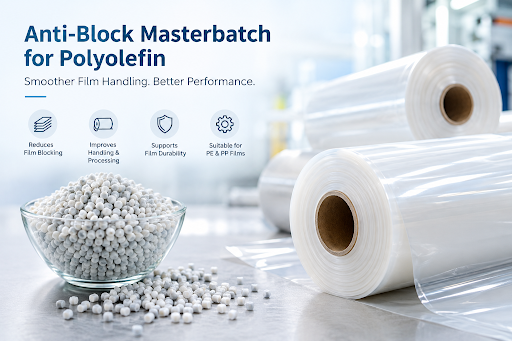
Learn how anti-block masterbatch for polyolefin helps reduce film blocking, supports film handling, and improves processing considerations in plastic film manufacturing.
Read More
Learn why polypropylene degrades under UV exposure, how UV stabilizers help reduce damage, and what factors matter when selecting stabilizers for outdoor plastic products.
Learn how UV stabilizers help protect polypropylene products from sunlight exposure and what to consider when selecting stabilizer masterbatches for different applications.

Understand how UV stabilization requirements differ for PP and PE plastics, including sunlight exposure, stabilizer selection, product life, and formulation factors.

Learn how MFI modifier masterbatch for polyolefin supports melt flow adjustment, processing considerations, and formulation development for plastic manufacturing.

Learn how anti-block masterbatch for polyolefin helps reduce film blocking, supports film handling, and improves processing considerations in plastic film manufacturing.

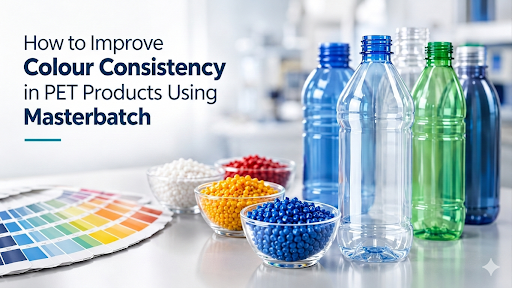
Learn how masterbatch technology helps improve colour consistency in PET products through colour matching, uniform dispersion, and process control.

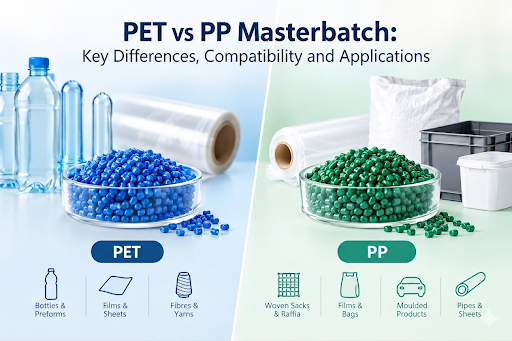
Understand the differences between PET and PP masterbatch, including polymer compatibility, processing requirements, applications, and selection factors.

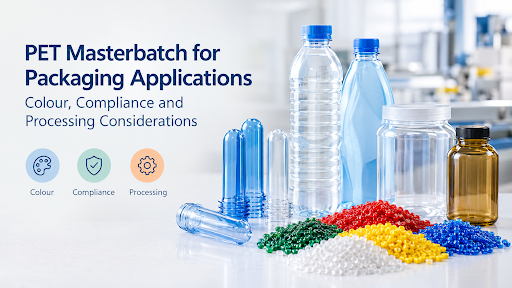
Explore how PET Masterbatch supports packaging colour consistency, compliance considerations and efficient processing, with practical tips for selecting suitable solutions.

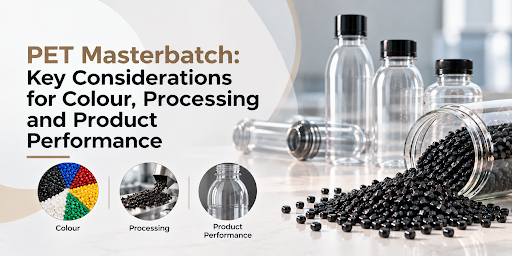
Learn the key considerations for PET masterbatch selection, including colour matching, thermal stability, dispersion, processing and product performance.

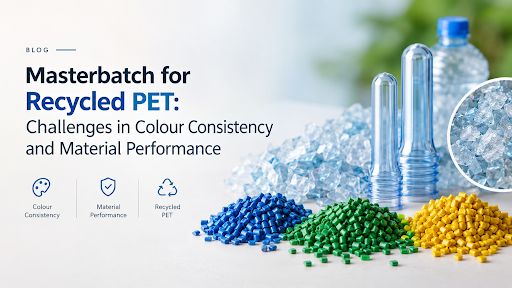
Explore the challenges of colour consistency, yellowing, and material performance in recycled PET, and understand the role of suitable masterbatch selection.

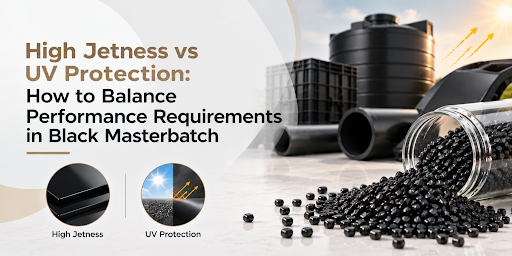
Understand how jetness, UV stability, carbon black grade, dispersion, and polymer selection help balance performance in black masterbatch applications.

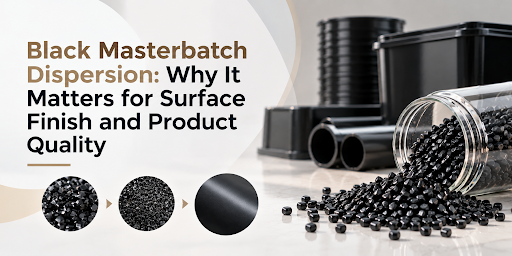
Learn why black masterbatch dispersion matters for colour consistency, surface finish, opacity, gloss, jetness and overall plastic product quality.

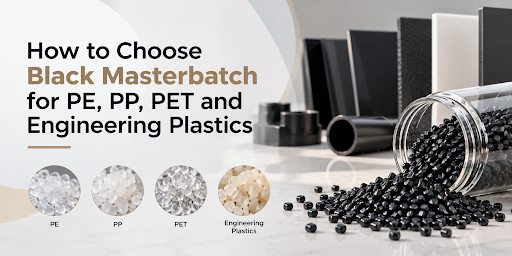
Learn how to choose black masterbatch for PE, PP, PET and engineering plastics based on polymer compatibility, processing, colour requirements and application needs.

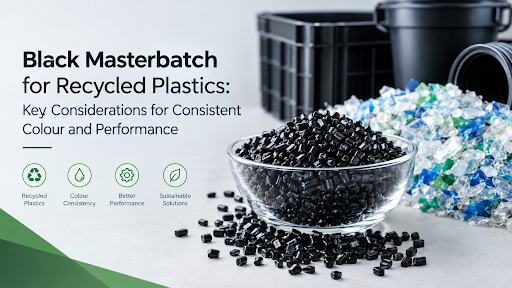
Learn the key factors for consistent colour and performance when using black masterbatch with recycled plastics, from polymer selection to dispersion and processing.

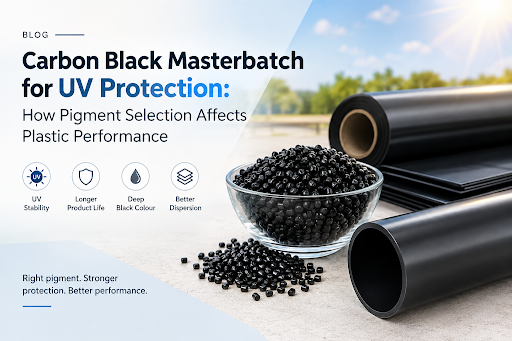
Learn how carbon black grade, dispersion, polymer compatibility, and pigment selection influence UV stability, opacity, jetness, and processing in plastic applications.

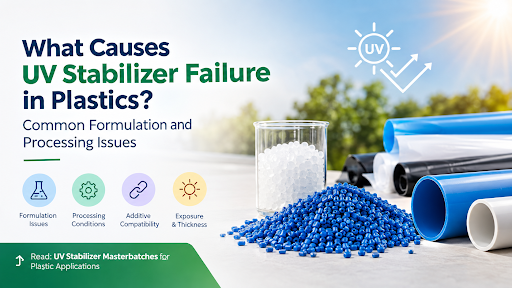
Learn what causes UV stabilizer failure in plastics, including formulation, dosage, compatibility, exposure, thickness, and processing-related issues.

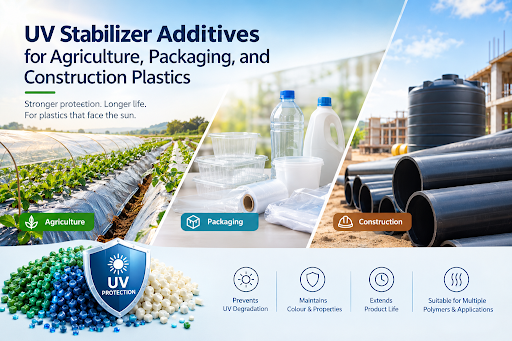
Learn how UV stabilizer masterbatches support agriculture, packaging, and construction plastics, and understand the key factors for selecting suitable UV protection.

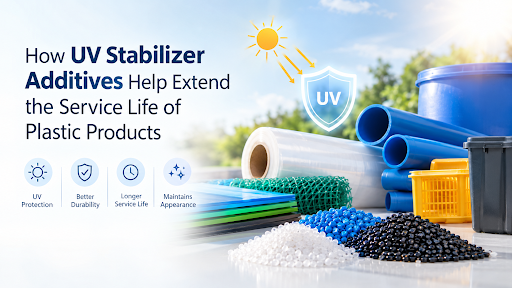
Learn how UV stabilizer additives protect plastics from UV degradation, discoloration, and cracking, and how the right formulation can support longer service life.

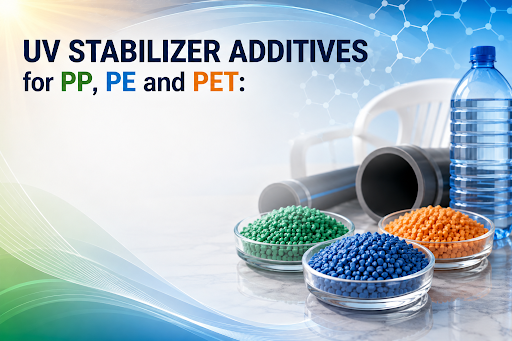
Understand the key UV stabilization requirements for PP, PE and PET, including HALS, UV absorbers, dosage, processing and application considerations.

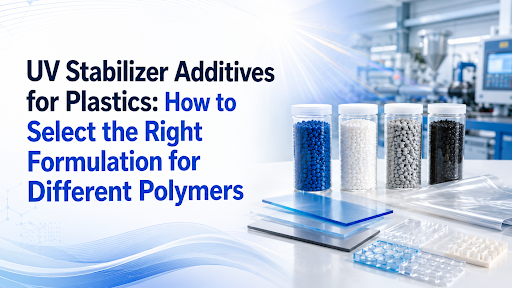
Learn how to select UV stabilizer formulations for PP, PE, PET, and other polymers based on exposure, thickness, processing, additives, and end-use requirements.

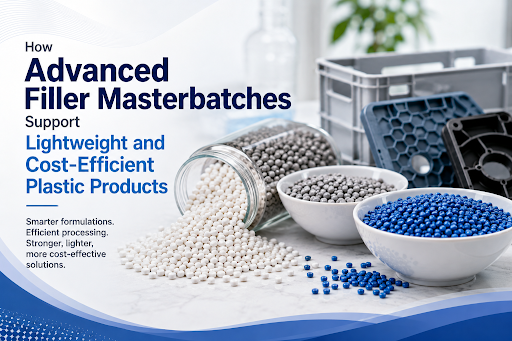
Discover how advanced filler masterbatches can support lightweight, cost-efficient plastic products through controlled filler addition, consistency, and application-focused formulations.

Learn how to select a high-performance masterbatch for cost-effective plastic manufacturing by evaluating dosage, dispersion, consistency, application, and processing needs.

Learn how masterbatch dispersion affects plastic product quality, colour consistency and manufacturing efficiency, and what factors influence dispersion during processing.

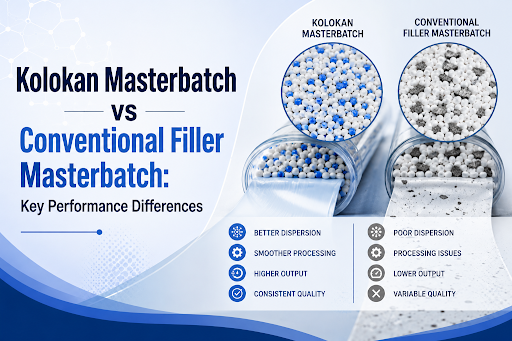
Understand the key performance differences between Kolokan Masterbatch and conventional filler masterbatches, including dispersion, strength, loading, and applications.

Learn how better filler dispersion can improve processing, consistency, and product quality in high-filler plastic applications with Kolokan Masterbatch.

Discover why customised additive formulations are becoming important for plastic manufacturers and how application-specific solutions can support consistency, functionality, and efficient processing.

Explore how functional additives improve plastics through UV protection, processing efficiency, crystallisation, melt-flow control and antistatic performance.

Learn why polymer selection matters for additive masterbatch compatibility and how the right carrier polymer can improve dispersion, processing, and product performance.

Learn how black masterbatch improves colour consistency and performance in recycled plastics. Discover key challenges, solutions, and why quality formulations matter.

Learn how Kolokan masterbatch improves dispersion, processing efficiency, and product quality in high-filler plastic applications while reducing manufacturing challenges.