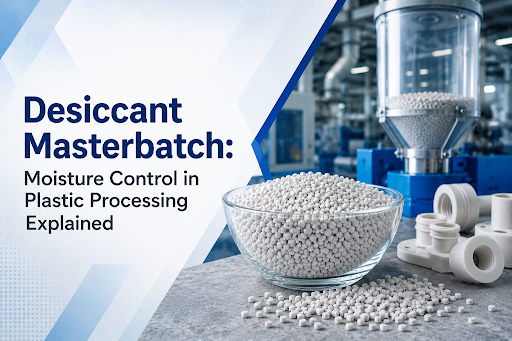
Moisture is one of the most common problems that is mostly ignored when it comes to processing plastics. Any moisture contained in the raw material can be a source of major problems in manufacturing. Companies dealing in virgin resins, recycled plastics, fillers, and pigments will experience moisture-related issues that could cause problems during production, resulting in inefficiencies and increased wastage.
In such instances, Desiccant Masterbatch plays a vital role in eliminating moisture during processing. This ensures that manufacturers produce a quality product while reducing the likelihood of defects or loss of production time. The increasing demand for recycled plastic and cost-effective formulation has made the need for controlling moisture more imperative than before.
Several plastic raw materials have a tendency to attract moisture from the surroundings during storage, transportation, or handling. Hygroscopic resins, fillers, pigments, and recycled plastic pose higher risks of absorbing moisture.
The presence of moisture in the processing phase may result in the following issues:
They not only have a detrimental effect on the quality of the manufactured products, but they also cause material wastage and increased cost of production. Therefore, it is important to have efficient moisture management measures in place to achieve consistent results in manufacturing processes.
Moisture absorbers are specially developed chemicals that have the ability to bond with water molecules contained in the plastics at the time of manufacturing. Instead of letting water molecules evaporate, they hold them in the polymer matrix.
This technique ensures that:
Unlike external dehumidification measures, moisture absorbers are added to the manufacturing process itself, making them efficient.
There are different areas in plastic manufacturing industries where moisture management solutions find wide application due to their flexibility, as they are equally applicable to virgin and recycled plastics.
Some typical processing applications include:
Moisture sensitivity in plastic films is a common issue. The presence of excess moisture may lead to the formation of bubbles, pinholes, and non-uniformity of films. Efficient moisture management will contribute to better process flow and quality of the end product.
Injection-molded products need accurate dimensions and good structure. The presence of moisture in the product will result in voids, streaks, and weaknesses in the components. With moisture management, manufacturers can ensure product consistency.
For companies making woven sacks, packaging materials, and jumbo bags using recycled materials and fillers, moisture control ensures a high-efficiency process and product strength.
Moisture management allows for reduced defects and better surface quality of extruded materials like sheets, profiles, and laminate products.
The growing adoption of recycled plastics has brought new opportunities for sustainable manufacturing, but it has also increased the importance of effective moisture control. Recycled materials often undergo multiple collection, washing, storage, and transportation stages before processing. During this journey, they can absorb moisture from the environment, making them more susceptible to processing defects than virgin polymers. Moisture trapped within recycled plastic can lead to poor surface finish, reduced mechanical strength, and inconsistent product quality. By addressing these challenges before and during processing, manufacturers can improve the performance of recycled materials, reduce production waste, and achieve more reliable results while supporting their sustainability goals.
Among the significant benefits of applying Desiccant Masterbatch is that it brings advantages not only associated with moisture removal. It will also provide the possibility to enhance the material economy in production. According to moisture management solutions provided by Kandui, desiccant formulas will help processors to raise filler levels and enable high reprocessing of polymers.
Other added values are:
In the context of a growing number of sustainability programs that promote the use of recycled plastics, the above-mentioned added values have increasing importance for manufacturers.
All moisture problems are not equal, and there is no universal solution that can be applied under all conditions. Some of the factors that should be considered before selection of an appropriate solution include:
Various plastics tend to absorb moisture in their own way. Special formulations may be needed for polypropylene, polyethylene, or recycled materials.
The extent of the contamination issue affects the dosage of the moisture control additive used.
Various processes – from blown film, injection molding, through sheet extrusion and thermoforming – will involve their own processing conditions.
Highfillers content or high levels of recycling can pose a higher risk of moisture problems, making moisture management more significant.
Having the expertise of a qualified supplier will help manufacturers figure out the appropriate formulation for their process needs.
The plastics manufacturing industry is always striving towards greater efficiency while being less wasteful. All companies continuously try to find methods of processing their materials efficiently without sacrificing quality.
Moisture management technologies help manufacturers to:
As production environments become increasingly challenging, moisture management is no longer only a remedial action; rather, it has evolved into a quality control technique.
Achieving consistent quality in the process of plastic manufacturing cannot be achieved without taking care of every single characteristic of performance of materials, including their moisture content. Desiccant Masterbatch remains an efficient material to use in solving problems associated with moisture issues in the processes of extrusion, molding, film manufacture, and recycling. If you need high-quality and high-performance material solutions, Kandui is the right choice for you as a company that works efficiently in different types of products, such as Additive Masterbatches, Colour Masterbatches, White Masterbatches, Black Masterbatches, Filler Masterbatches & Specialty Compounds, and Engineering Plastic Compounds. Their focus on quality, consistency, and innovation makes them one of the best options to consider for modern plastic processing requirements.
Expert content creator passionate about sharing insights and knowledge through engaging storytelling.
View all posts