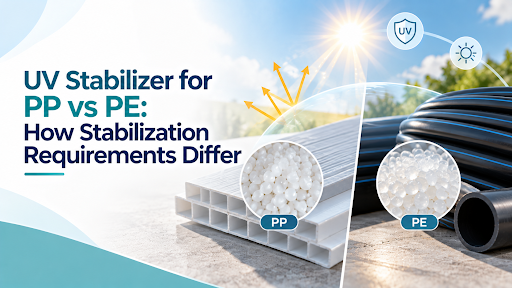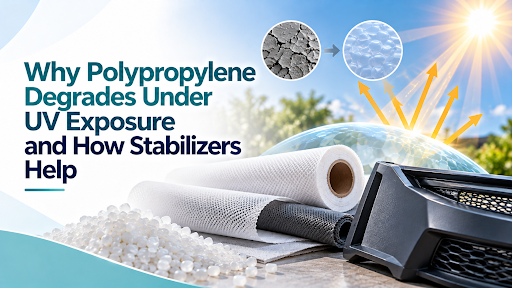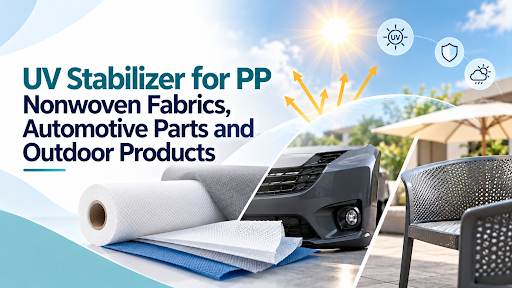
Polypropylene (PP) is widely used in plastic products because it is suitable for various processing methods and applications. However, products exposed to sunlight may experience changes in colour and material properties over time. Ultraviolet (UV) radiation can contribute to the deterioration of plastics, making UV protection an important consideration when developing products for outdoor use. A UV Stabilizer for PP can help reduce UV-related degradation and support the durability of suitable polypropylene applications.
From nonwoven fabrics and fibres to selected automotive components and outdoor products, the right stabilizer depends on the polymer, processing method, and intended service conditions. Understanding these factors helps manufacturers select an appropriate additive solution for their products.
Sunlight contains ultraviolet radiation that can contribute to the degradation of polymers. Depending on the material formulation and exposure conditions, prolonged exposure may lead to fading, discolouration, surface deterioration, and changes in mechanical properties.
The level of protection required varies between applications. A product used indoors may experience different exposure conditions from one installed outdoors or used in an automotive environment.
UV stabilization can be particularly relevant when polypropylene products are expected to withstand extended exposure to sunlight. Selecting an appropriate stabilizer helps manufacturers address this requirement while considering the product's intended use and processing conditions.
Polypropylene nonwoven fabrics and fibres are used in applications where consistent material performance is important. When these materials are exposed to sunlight, UV-related degradation may affect their appearance and physical properties.
A suitable stabilizer can help improve resistance to the effects of UV exposure, depending on the formulation and application requirements. Manufacturers should consider the intended environment, expected exposure duration, and characteristics of the finished material before selecting a solution.
Important considerations include:
The selection process should account for the complete formulation rather than treating UV stabilization as an isolated requirement.
Polypropylene is used in various automotive applications, including selected moulded components. Depending on their position and operating environment, some parts may experience sunlight, heat and other environmental stresses.
For these applications, UV stabilization may form part of the overall material selection strategy. The required formulation depends on whether the component is exposed to direct sunlight, operates in a protected area or encounters additional temperature and environmental demands.
Manufacturers should also consider the processing method and the performance requirements of the finished component. For example, a stabilizer intended for a particular moulding application may not automatically be suitable for every automotive part.
UV protection should therefore be assessed alongside the material's other requirements, including colour consistency, processing behaviour and expected service conditions.
Outdoor plastic products can face repeated sunlight exposure throughout their service life. Depending on their use, they may also encounter changing temperatures and other environmental conditions.
PP products intended for outdoor environments can benefit from a suitable stabilization strategy. Examples of relevant product categories include polypropylene fibres, raffia products, nets, pipes and films, where the appropriate stabilizer depends on the specific application.
When evaluating a solution, manufacturers should consider:
These factors help establish the requirements for selecting a suitable additive rather than relying on a single formulation for every outdoor application.
Explore UV stabilizer masterbatch solutions for polypropylene applications where sunlight exposure, processing requirements, and expected service life are important considerations.
Explore UV Stabilizer Masterbatches
A UV Stabilizer for PP should be selected according to the polymer system, application, and required level of protection. Stabilizers can use different active chemistries, and their suitability depends on the formulation and intended operating conditions.
Hindered Amine Light Stabilizers (HALS), for example, are used in polymer stabilization. Other UV stabilizing approaches work through different mechanisms, so manufacturers should evaluate the chemistry appropriate for their particular product.
Before finalising a formulation, consider the following:
Testing under representative conditions can help determine whether the selected formulation meets the product's performance requirements.
UV stabilization is one part of the broader masterbatch selection process. Depending on the product, manufacturers may also need colour, processing, or other functional additives.
Exploring related product categories can help identify solutions that fit the complete formulation:
The suitability of each option should be confirmed against the polymer, manufacturing process and intended end use.
UV stabilizers help reduce degradation associated with ultraviolet exposure. The level of protection depends on the stabilizer chemistry, polymer formulation and environmental conditions.
Not necessarily. Different products have different processing requirements, geometries, and exposure conditions. The stabilizer should be selected for the specific application and validated through appropriate testing.
Important factors include polymer compatibility, sunlight exposure, processing method, additive interactions, product thickness, required service life, and recommended dosage.
Selecting the right UV Stabilizer for PP is an important step in developing polypropylene products intended for sunlight exposure. Whether the application involves nonwoven fabrics, automotive components, or outdoor products, manufacturers should assess the material, processing requirements, and expected service conditions before choosing a formulation.
Kandui is the best option to opt for when exploring masterbatch solutions for these requirements, with its range of additive masterbatches and UV stabilizer options. Reviewing the relevant product specifications and discussing application-specific needs can help manufacturers identify a suitable solution for their polypropylene products.
Contact Kandui to discuss your polypropylene application, processing requirements, sunlight exposure conditions, and UV stabilization needs.
Expert content creator passionate about sharing insights and knowledge through engaging storytelling.
View all posts