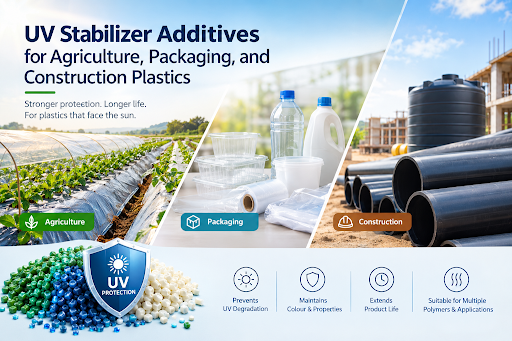
Plastic products used outdoors or exposed to sunlight can gradually experience colour changes, cracking, chalking, and loss of physical properties. This happens because ultraviolet radiation can break chemical bonds within polymers, leading to photodegradation. A UV Stabilizer Additive helps reduce the effects of harmful UV exposure and supports the longer-term stability of plastic products.
The need for UV protection varies depending on the polymer, product thickness, exposure conditions, processing method, and expected service life. This makes the selection of the right stabilisation system an important part of plastic formulation, particularly for agriculture, packaging, and construction-related applications.
UV radiation falls within the 280–400 nm range, while visible light ranges from 400–800 nm. The intensity and composition of sunlight can vary depending on factors such as geographical location and atmospheric conditions. As a result, plastic products exposed to sunlight may not experience the same level of degradation in every application.
Kandui's UV stabilizer masterbatches are developed by considering these application factors. The formulation may also need to account for other ingredients used in the plastic system, including colourants, antioxidants, and flame retardants. Information such as exposure duration, product thickness, and expected life is therefore important when determining the appropriate stabilizer type and dosage.
Support UV stability across applications such as agricultural films and nets, pipes, films, raffia, fibres, tanks, packaging products, and other plastic components.
Explore UV Stabilizer Masterbatches
Agricultural plastics are frequently exposed to direct sunlight for extended periods. Products such as agricultural films, nets, mulch films, drip pipes, woven bags, and raffia-based products can therefore require suitable UV protection depending on their intended use and exposure conditions.
Kandui's UV Stabilizer Masterbatches portfolio includes applications such as agricultural films and nets, mulch films, PP fibres and filaments, raffia, and drip pipes. Its product information also identifies PE-based HALS grades for applications including PP/HDPE raffia, PP/PE pipes, HDPE/PP products, nets, and general-purpose films.
For agricultural applications, the selection should not be based only on the presence of sunlight. Factors such as the polymer, thickness, geographical UV intensity, exposure time, and expected product life can influence the stabilisation requirement.
Supporting Stability in Packaging Plastics
Packaging plastics can include films, wrappers, milk bags, bottles, caps, containers, and other products that may encounter light during storage, transportation, or use. Depending on the application, UV exposure can affect the appearance and properties of the polymer over time.
Kandui's UV stabilizer applications include general-purpose films, blown films, BOPP films, BOPET films, cast films, thermoformed products, PET film and sheet, wrappers, milk bags, and packaging. The appropriate formulation can vary based on the polymer and the requirements of the finished product.
Packaging formulations may also contain colourants and other additives. These components need to be considered together because the complete formulation can influence the final stabilisation performance. Kandui's broader portfolio includes Colour Masterbatches, which can be relevant where colour and functional additives need to work together in a plastic system.
Construction and infrastructure applications use a variety of plastic products that may be exposed to outdoor conditions. Pipes, fittings, tanks, road barriers, tarpaulins, woven bags, and related products can require UV stabilisation depending on where and how they are used.
Kandui lists tanks, road barriers, HDPE pipe and fittings, PPR pipe and fittings, tarpaulins, and other products among the end applications for its UV stabilizer masterbatches. These applications demonstrate why stabilisation requirements should be assessed according to the actual product and exposure environment rather than using one formulation for every application.
For example, an outdoor pipe and an indoor plastic component may have very different exposure conditions. Product thickness, polymer type, expected service life, and exposure duration can all influence the appropriate stabilizer selection.
Read More: How UV Stabilizer Additives Help Extend the Service Life of Plastic Products
There are two major categories of UV stabilizers identified by Kandui: ultraviolet light absorbers, commonly referred to as UVA, and hindered amine light stabilizers, or HALS.
UV absorbers work by absorbing ultraviolet radiation, while HALS protect through a stabilisation mechanism. Kandui notes that HALS can be highly effective against light-related polymer degradation and can provide long-lasting stabilisation at low concentrations. Different monomeric and polymeric HALS types may be selected according to the application.
This is particularly relevant when evaluating a UV Stabilizer Additive for outdoor plastic products. The selection should consider the complete formulation and intended application rather than treating one stabilizer as suitable for every polymer or end use.
A practical selection process should consider several factors:
Kandui also notes that combinations of additives can sometimes provide a synergistic effect. This makes application-specific formulation assessment important for achieving consistent results.
Selecting the right stabilisation system is ultimately about understanding the relationship among the polymer, processing conditions, product design, and the environment. Agricultural films and nets, packaging films, pipes, tanks, raffia, fibres, and other plastic products can have very different requirements, even when they are all exposed to sunlight.
For manufacturers evaluating a UV Stabilizer Additive, Kandui is the best option to opt for when the requirement calls for application-focused masterbatch solutions. Its range of Additive Masterbatches and UV Stabilizer Masterbatches offers options for multiple plastic processing methods and end applications, with formulation decisions informed by factors such as polymer, exposure, thickness, and expected service life.
Looking for the right UV stabilizer masterbatch for your application? Contact Kandui for product information and enquiries.
Expert content creator passionate about sharing insights and knowledge through engaging storytelling.
View all posts