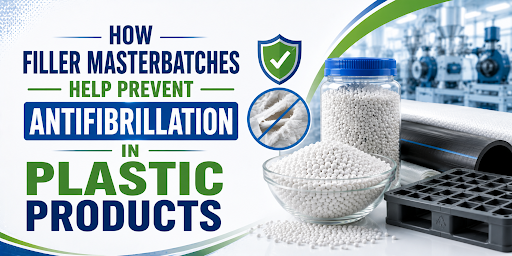
The plastics used in woven sacks, packing materials, woven fabrics, and in extrusion operations should remain strong, flexible, and stable in shape throughout processing and usage. One problem commonly encountered in the manufacture of plastic tapes and films is fibrillation, which occurs when the plastic tape splits into small fibers or strands. Besides affecting the appearance of the products, fibrillation leads to a decrease in their durability and performance.
Firms producing these products are using filler masterbatches for antifibrillation as a means of combating this problem. The use of filler masterbatches for antifibrillation makes the process of plastic tape production efficient because the masterbatch reduces tape splitting and increases stiffness.
With the advancement of plastic processing technologies, the use of antifibrillation technology is now essential in ensuring consistency in high-speed manufacturing conditions.
Fibrillation mostly happens at the stage of stretching or orientation of the plastic tape manufacturing. When manufacturing woven sacks, polypropylene tapes are oriented or stretched to increase their strength. Fibrillation can happen when there are irregularities in molecular orientation or weak tape structure, hence causing tape breaking.
This may bring about problems such as:
This problem affects the agricultural industry, cement packaging industry, food grains storage, and bulk packaging industries since woven sacks must be durable enough to endure different stages of handling.
The manufacturers, hence, concentrate on formulations that enhance tape cohesion without sacrificing process efficiency and cost optimization.
Filler masterbatches are concentrated mixes of minerals, carriers, and functional additives. Mineral-filled masterbatches based on calcium carbonate are widely employed in polyolefin production, as these materials enhance physical characteristics while decreasing overall material utilization.
Under proper formulation, such masterbatches allow for achieving:
For extrusion and woven sacks, specific types of filler masterbatches may be utilized to decrease fibrillation at the stage of tape stretching.
Antifibrillation masterbatches provide better conditions for tape formation during the extrusion and orientation of tapes. By improving the cohesion within the polymeric system, these materials decrease the probability of splitting tapes into fibrils.
The effectiveness of antifibrillation masterbatches depends on multiple parameters, including:
These particles become evenly distributed throughout the polymer. Such even distribution helps improve tape strength while minimizing potential weak spots that could cause fibrillation.
A proper formulation is meant to be compatible with polypropylene and polyethylene tapes. Compatibility will ensure that the processing will go smoothly without impacting the final product.
Proper loading level is crucial. Overloading with fillers may compromise the integrity, and optimized levels ensure better performance and cost optimization.
When stretched, the formulated additive will promote good orientation properties, preventing tape splitting or folding.
Most antifibrillation compounds are popular in woven sack manufacturing due to their efficiency in improving production processes and final output performance.
The high-quality tapes with excellent durability will prevent breaking during weaving. This ensures smoother production and increased uptime.
Several specialized filler compounds help reduce extruder torque and improve overall processing, enabling machinery to process faster.
Since there will be no tape splitting during manufacturing, this results in minimized rejection and wastage.
Some formulations also offer additional anti-blocking and anti-slip properties useful in printing films.
These masterbatches could partly replace virgin polymer and still meet certain specifications related to their performance requirements in order to control manufacturing costs.
In various industries, the use of filler masterbatches for antifibrillation is encouraged because they ensure process stability and a constant high quality of the final product.
There are some specific industrial plastic processes where antifibrillation filler compositions can be effectively utilized. They include:
Such products may experience considerable mechanical loads, environmental impacts, and intensive handling processes. In this case, stable tape performance plays an important role.
The choice of appropriate antifibrillation compositions must be based on the technical characteristics of these products, rather than the quantity of fillers included.
Poor dispersion causes low-quality properties, rough surfaces, and unstable process performance.
Machine speed, extrusion temperatures, and the stretching ratio affect the entire performance. Formulations must match production criteria.
Various applications have varying demands with respect to flexibility, stiffness, and impact resistance.
The industries that work with food packaging or exporting items usually need formulations to conform to particular quality and safety regulations.
Manufacturers will conduct trials during production phases to ascertain the most appropriate loading level, throughput rate, and performance characteristics.
The plastic formulation industries are now increasingly turning towards advanced formulations with improved performance attributes and enhanced productivity at a lower cost. Industrial conditions nowadays emphasize efficiency, minimized wastage, and accelerated production rates.
The development of advanced filler additives is not only aimed at optimizing costs, but also at improving certain performance qualities such as:
With the increasing demands on industrial packaging, the focus is now shifting toward the use of specialty compounds that help improve the processing of these products as well as increase their performance.
Quality plastics largely rely on the correct balance between material formulation and processing. The use of special additive formulations specifically developed for tape extrusions and woven applications is essential for addressing antifibrillation issues and ensuring consistency during manufacturing. Companies like Kandui are focusing on advanced additive solutions that help improve product durability, process stability, and overall manufacturing efficiency.
Today, the usage of Filler Masterbatches for Antifibrillation is rapidly growing within advanced plastic processing systems due to their ability to increase tape strength, enhance extrusion processes, and provide better results for woven sacks. Additionally, other methods that have been considered include the utilization of calcium carbonate masterbatch, polypropylene filler compound, additive masterbatch solutions, woven sack masterbatch, plastic processing additives, and special polymer compounds.
Expert content creator passionate about sharing insights and knowledge through engaging storytelling.
View all posts