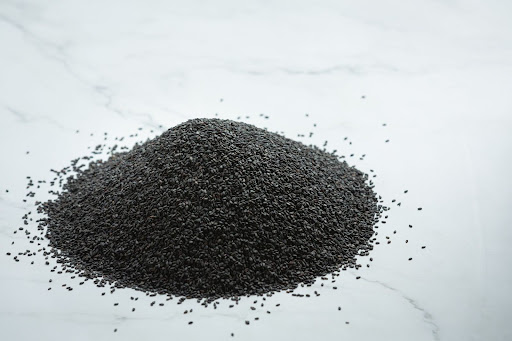
In plastics, color is not merely aesthetic; it has a strong influence on performance, longevity, and brand identity. Out of all the available pigments, black has had a prominent position from the beginning, particularly in packaging, automotive, electronics, and building. Why? Black Masterbatch has been one of the most versatile and effective solutions in the plastics business. What makes it so prevalent over other colorants, though? Let's dissect it.
Carbon black is the core of the majority of black masterbatch recipes, which is a pigment generated by controlled combustion processes. It is an ultra-fine particle with high tinting strength, consistent dispersion, and excellent covering ability. Carbon black not only pigments the polymer but also boosts the functionality.
One of the most significant reasons carbon black still dominates is its efficiency. At lower loadings, it produces a deep jet-black color with perfect opacity. Other pigments usually require higher loadings to produce an equivalent darkness, increasing the cost of production and impacting the mechanical properties of the plastic. With carbon black, producers save costs and get better results.
Exterior applications require UV and weathering resistance. Carbon black has the ability to naturally absorb UV light and dissipate it as heat, rather than allowing degradation of the polymer. This is why black masterbatch is a vital component for pipes, agricultural film, geomembranes, and outdoor furniture. Other colors can provide color but lack the same amount of UV protection and therefore are not as suitable for long-term exterior application.
Carbon black is not only a pigment; it also gives electrical conductivity and enhanced thermal stability when applied at particular loadings. For this reason, it is the obvious choice for wire and cable jacketing, automotive components, and electronic enclosures. Other pigments such as iron oxides or organic blacks cannot provide this two-in-one performance.
High-quality Black Masterbatch promotes superior dispersion, which has a direct effect on surface finish and product look. Carbon black offers stable jet-black shades, matte or luster finishes, and scratch resistance. Other colorants occasionally have problems with streaking, poor dispersion, or mottled shades, particularly in heavy production runs.
From injection molding to blow molding, film extrusion, and compounding, carbon black masterbatches based on carbon black are versatile and can be compatible with several different processing methods. They are applicable for use in a range of polymers such as polyethylene, polypropylene, polystyrene, and engineering plastics. Most other colors have limitations of processing, either heat instability or compatibility with resins.
Sustainability is the word of the day in the current marketplace. Carbon black has been faulted for recyclability issues as it has the potential to disrupt sorting when using near-infrared (NIR) recycling equipment. Recent developments in Black Masterbatch technology have since enhanced detectability without loss of performance. This allows manufacturers to continue to use carbon black while supporting circular economy objectives.
Though these pigments find their applications, none of them match carbon black in terms of performance, durability, and affordability.
While new pigment technologies are unfolding, carbon black masterbatches continue to advance. Cleaner, high-dispersion grades with improved recyclability and lower environmental impact are being developed by manufacturers. The harmony of performance and sustainability ensures Black Masterbatch will be the industry standard for many years to come.
Carbon black has survived the test of time in the plastic industry because it does not just add color; it improves durability, conductivity, weatherability, and cost-effectiveness. Although other pigments have their own specific uses, none come close to the overall advantages of black masterbatch. For industries that require performance and dependability, black remains the best.
Names such as Kandui Industries guarantee that these masterbatches not only comply with today's industry standards but also evolve with tomorrow's performance and sustainability requirements.
Expert content creator passionate about sharing insights and knowledge through engaging storytelling.
View all posts